Supply chains are opaque by design. Multiple parties handle goods, each using different systems, and nobody sees the full picture. When a shipment goes missing or a counterfeit product slips through, you’re left playing detective across dozens of siloed databases.
Blockchain changes that fundamental problem. It creates a shared, tamper-proof record that every authorized party can access. No more phone tag. No more conflicting spreadsheets. Just one version of the truth that updates in real time.
Blockchain supply chain transparency gives every stakeholder instant access to a single, immutable record of product movement and custody. This shared ledger eliminates information gaps, reduces fraud, speeds up dispute resolution, and enables real-time traceability from manufacturer to end customer without relying on intermediaries or reconciling multiple databases.
Why traditional supply chain systems fail at transparency
Most supply chains rely on a patchwork of enterprise resource planning systems, spreadsheets, emails, and paper documents. Each company maintains its own records. When you need to trace a product’s journey, you have to contact every participant and hope their data matches.
This fragmentation creates blind spots. You might know when a container left your warehouse, but you have no visibility into what happened at the port, during transit, or at the distributor’s facility. Information arrives late, often after problems have already escalated.
Data tampering is another risk. A bad actor can alter records in their own system, and you won’t know until the discrepancy surfaces weeks later. By then, the trail has gone cold.
Verification takes days or weeks. Auditors must manually cross-reference documents from multiple sources. Compliance teams spend countless hours chasing down certificates, inspection reports, and custody records that should be instantly accessible.
How blockchain creates a single source of truth
Blockchain solves these problems by giving all authorized parties access to the same ledger. When a manufacturer ships a product, they record that transaction on the blockchain. The distributor sees it immediately. So does the retailer, the logistics provider, and anyone else with permission.
Each transaction gets bundled into a block and cryptographically linked to the previous block. This creates a permanent chain of custody that nobody can alter without detection. If someone tries to change a past record, the cryptographic hash changes, and the network rejects the modification.
You don’t need to trust any single party. The system itself enforces integrity through consensus mechanisms. Multiple nodes validate each transaction before it gets added to the ledger. This distributed validation makes fraud exponentially harder.
How distributed ledgers actually work explains the technical foundation behind this shared record system.
Smart contracts automate verification. When goods arrive at a checkpoint, sensors can automatically trigger a contract that updates the ledger, releases payment, or notifies the next party in the chain. No manual data entry. No waiting for someone to process paperwork.
Transparency versus traceability in blockchain systems
People often use these terms interchangeably, but they mean different things in a blockchain context.
Transparency means all authorized parties can see the same data at the same time. Everyone works from the same set of facts. No information asymmetry. No hidden transactions.
Traceability means you can follow a product’s journey backward or forward through the supply chain. You can see where it came from, who handled it, and where it went. This becomes powerful when you need to investigate quality issues or verify authenticity.
Blockchain delivers both. The shared ledger provides transparency. The immutable chain of custody enables traceability. Together, they give you unprecedented visibility into your supply chain operations.
But transparency doesn’t mean exposing trade secrets. Permissioned blockchains let you control who sees what. You might share location data with logistics partners while keeping pricing information private. Zero-knowledge proofs can even verify facts without revealing the underlying data.
Real benefits enterprise teams are seeing
Companies implementing blockchain for supply chain transparency report measurable improvements across several areas.
Faster dispute resolution: When everyone sees the same records, arguments about what happened become rare. If a dispute does arise, you can reference the blockchain instead of sorting through conflicting documents. Resolution time drops from weeks to hours.
Reduced counterfeiting: Every product gets a unique identifier recorded on the blockchain. Consumers or retailers can scan a code and verify authenticity instantly. Counterfeiters can’t replicate the blockchain record, even if they copy the physical product.
Better compliance documentation: Regulators want proof that products meet safety standards, environmental requirements, and ethical sourcing rules. Blockchain stores all certificates, inspection reports, and audit trails in one tamper-proof location. Compliance teams can generate reports in minutes instead of days.
Lower inventory carrying costs: Real-time visibility means you know exactly what’s in transit, what’s in warehouses, and what’s on shelves. This precision reduces safety stock requirements and helps you optimize inventory levels across the network.
Improved recall efficiency: When you discover a quality issue, blockchain lets you identify affected batches instantly. You can trace every unit, see where it went, and notify only the relevant parties. This targeted approach saves money and protects your brand.
Building a transparent supply chain with blockchain
Implementing blockchain transparency requires careful planning. Here’s how successful companies approach it:
-
Map your current supply chain: Document every participant, handoff point, and data source. Identify where information gaps exist and which processes cause the most friction.
-
Define your transparency goals: Are you trying to combat counterfeiting? Speed up customs clearance? Improve sustainability reporting? Your goals will shape which data you track and who gets access.
-
Choose the right blockchain architecture: Public vs private blockchains offer different tradeoffs. Most enterprise supply chains use consortium models where trusted partners share a permissioned network.
-
Integrate with existing systems: Your blockchain needs data from IoT sensors, warehouse management systems, transportation platforms, and supplier portals. APIs and middleware handle these connections.
-
Establish governance rules: Who can write data to the blockchain? Who can read it? How do you handle disputes? What happens if a participant leaves the network? Document these policies before launch.
-
Start with a pilot program: Pick one product line or one route. Prove the concept with a limited scope before rolling out across your entire operation.
The technical implementation matters less than getting stakeholder buy-in. Your blockchain is only as valuable as the data people put into it. If suppliers don’t participate or logistics partners feed in garbage data, the system fails.
Common implementation challenges and solutions
Every blockchain supply chain project faces similar obstacles. Here’s what to watch for:
| Challenge | Why it happens | Practical solution |
|---|---|---|
| Data quality issues | Participants enter incorrect information or skip steps | Implement IoT sensors for automatic data capture and validation rules that reject incomplete entries |
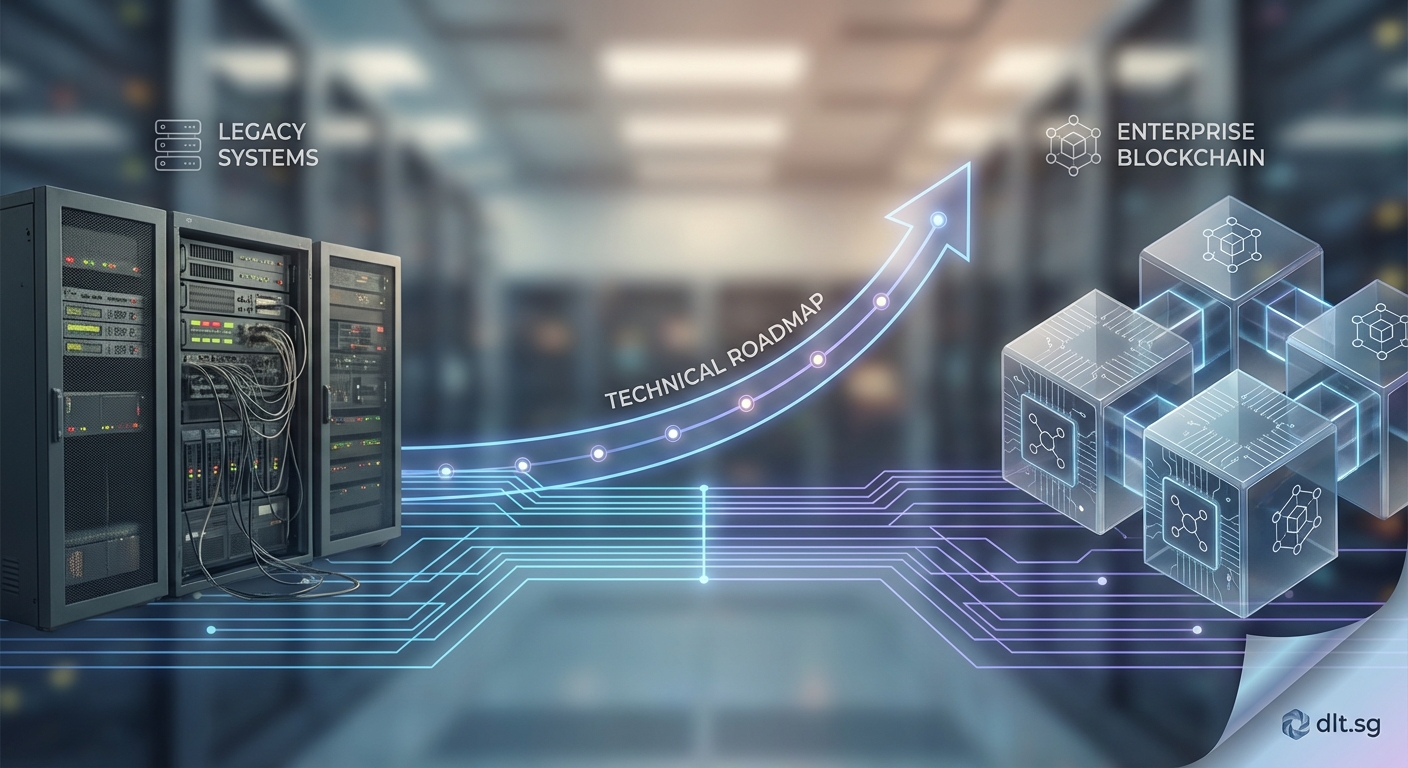
| Integration complexity | Legacy systems weren’t built to talk to blockchains | Use middleware platforms that translate between old and new systems without replacing existing infrastructure |
| Slow partner adoption | Companies resist changing established workflows | Start with high-value use cases that deliver immediate benefits, making the value proposition obvious |
| Scalability concerns | Public blockchains can’t handle enterprise transaction volumes | Use permissioned networks with higher throughput or layer-2 solutions that batch transactions |
| Regulatory uncertainty | Blockchain rules vary by jurisdiction | Work with legal teams familiar with your regions and build flexibility to adapt as regulations evolve |
The biggest mistake is treating blockchain as a technology problem. It’s a business process problem that happens to use blockchain as a solution. Focus on the workflows you want to improve, not the underlying tech.
What happens when you record a supply chain event
Understanding the mechanics helps you appreciate why blockchain transparency works differently than traditional systems.
When a warehouse worker scans a pallet for shipment, that action triggers a transaction. The system bundles relevant data: product IDs, quantity, timestamp, location, handler identity, and destination.
This transaction gets broadcast to network nodes. Validators check that the transaction follows the rules. Does this user have permission to ship these goods? Is the data formatted correctly? Do the product IDs exist in the system?
Once validated, the transaction joins other pending transactions in a new block. The network agrees on the block through its consensus mechanism. Then the block gets added to the chain and distributed to all nodes.
Now every authorized party sees the update. The logistics company knows the shipment is ready. The buyer sees it left the warehouse. Customs can review the manifest. Everyone works from the same information at the same time.
What happens when you send a blockchain transaction walks through this process in greater technical detail.
The entire sequence takes seconds or minutes, depending on the blockchain. Compare that to traditional systems where information might not reach all parties for hours or days.
Real implementations delivering results
Several high-profile projects demonstrate blockchain transparency in action.
A major food retailer uses blockchain to track produce from farm to store. When contamination occurs, they can identify the source farm and affected stores in seconds instead of days. This speed prevents illness and reduces waste.
A diamond company records every stone on a blockchain from mine to retail. Buyers can verify their diamond wasn’t sourced from conflict zones. The company reports a significant increase in consumer trust and premium pricing.
An automotive manufacturer tracks parts across a multi-tier supplier network. When a component fails, they can trace it back through every supplier and process step. This visibility has cut warranty costs and improved quality control.
A shipping consortium built a blockchain platform that digitizes bills of lading and customs documents. Ports, carriers, and importers share the same records. Processing time at borders has dropped by 40%, and paperwork errors have nearly disappeared.
These aren’t experimental pilots. They’re production systems handling millions of transactions and delivering measurable ROI.
Privacy and selective transparency
One concern companies raise is competitive sensitivity. You want transparency with your supply chain partners, but you don’t want competitors seeing your supplier relationships or pricing.
Permissioned blockchains address this through access controls. You grant read permissions selectively. Your logistics partner sees shipment data but not purchase orders. Your auditor sees compliance documents but not customer lists.
Encryption adds another layer. You can store sensitive data off-chain and put only a hash on the blockchain. Authorized parties get the decryption key. Others see proof that data exists without seeing the data itself.
Consortium governance determines who joins the network. Unlike public blockchains where anyone can participate, enterprise consortia vet members. This controlled membership reduces privacy risks while maintaining the benefits of distributed validation.
Some platforms use zero-knowledge proofs to verify facts without revealing details. You can prove a product meets organic standards without disclosing which farm grew it or what you paid. The blockchain confirms compliance without exposing trade secrets.
Integrating IoT sensors for automatic verification
Manual data entry undermines blockchain transparency. If humans type in information, errors and fraud creep in. The solution is automatic data capture through Internet of Things devices.
Temperature sensors in refrigerated containers record conditions every few minutes. GPS trackers log location. RFID tags identify products as they move through checkpoints. All this data flows directly to the blockchain without human intervention.
This automation serves two purposes. First, it eliminates transcription errors and reduces labor costs. Second, it makes tampering much harder. A shipping manager can’t claim a container stayed cold if sensor data shows otherwise.
The combination of IoT and blockchain creates a powerful verification system. Physical sensors provide ground truth. Blockchain ensures that truth can’t be altered after the fact. Together, they give you confidence in your supply chain data.
Smart contracts can trigger actions based on sensor data. If a temperature spike occurs, the contract automatically alerts the quality team and flags the shipment for inspection. No one needs to monitor dashboards constantly. The system enforces rules autonomously.
Getting started with blockchain transparency
If you’re ready to implement blockchain in your supply chain, start small and focused.
Pick one pain point that costs you real money. Maybe it’s counterfeit products eating into revenue. Maybe it’s compliance audits consuming staff time. Maybe it’s slow customs clearance delaying shipments.
Find partners who share that pain. Blockchain transparency requires collaboration. You need at least two or three organizations willing to participate in a pilot.
Choose a platform designed for enterprise supply chains. Several established solutions offer pre-built templates for common use cases. You don’t need to build from scratch.
Define success metrics before you launch. How will you know the pilot worked? Faster processing times? Fewer disputes? Lower fraud rates? Pick measurable outcomes.
Run the pilot for three to six months. Collect data. Talk to users. Identify what works and what needs adjustment. Then decide whether to expand or pivot.
The technology is ready. The question is whether your organization and your partners are ready to change how you share information and verify transactions.
Why Singapore leads in blockchain supply chain innovation
Singapore’s position as a global logistics hub makes it a natural testing ground for blockchain transparency solutions.
The government actively supports blockchain adoption through regulatory sandboxes and funding programs. Port authorities have partnered with tech companies to pilot blockchain-based trade documentation. These initiatives give enterprises a supportive environment to experiment.
Major shipping lines, freight forwarders, and logistics providers operate in Singapore. This concentration of supply chain players makes it easier to build consortia and test solutions with real partners.
Southeast Asian supply chains are complex, spanning multiple countries with different regulations and systems. Blockchain helps harmonize data across these fragmented networks. Solutions proven in this challenging environment can work anywhere.
The city-state’s focus on becoming a smart nation extends to trade and logistics. Blockchain transparency aligns with broader digitalization goals. Companies working here can tap into a mature ecosystem of developers, consultants, and infrastructure providers.
Making transparency work for your business
Blockchain supply chain transparency isn’t about technology for its own sake. It’s about solving real business problems: lost shipments, counterfeit goods, compliance headaches, and information gaps that slow everything down.
The shared ledger model gives you visibility that traditional systems can’t match. Everyone sees the same data. Nobody can alter past records. Automation reduces manual work and human error.
Implementation takes planning. You need the right partners, clear governance, and integration with existing systems. But companies that get it right see faster operations, lower costs, and stronger trust across their supply chain networks.
Start by identifying where lack of transparency hurts you most. Then find partners who share that pain. Build a focused pilot that delivers measurable value. Learn from that experience and expand gradually.
The technology is mature. The use cases are proven. The question is whether you’re ready to rethink how your supply chain shares and verifies information. The companies making that shift now are building competitive advantages that will compound for years.