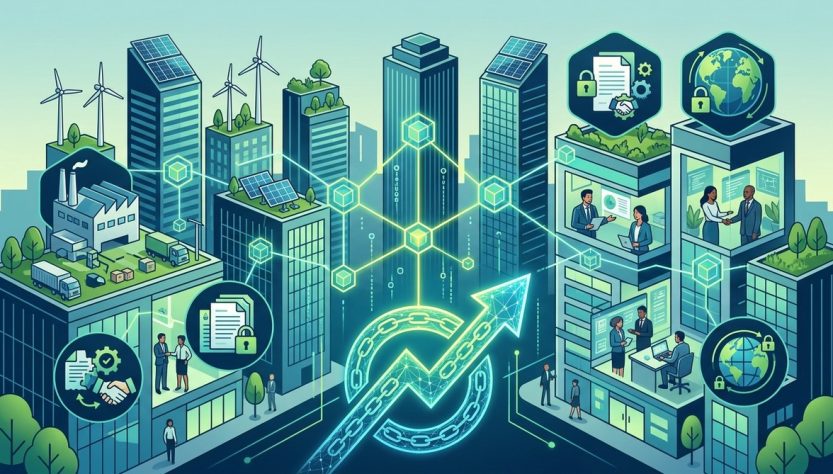
Businesses looking toward 2026 are realizing that blockchain technology is more than a trend. It offers practical ways to boost sustainability, improve transparency, and foster innovation. As companies seek to meet environmental goals and build trust with stakeholders, blockchain provides tools to turn these ambitions into reality. With its ability to create tamper-proof records, automate processes through smart contracts, and facilitate real-time data sharing, blockchain is transforming how enterprises approach sustainability.
In 2026, blockchain is set to be a cornerstone of sustainable business practices. It helps companies increase transparency, automate compliance, and innovate with new digital assets, all supporting long-term growth and responsible operations.
How blockchain is reshaping sustainable business strategies
Blockchain’s core features—decentralization, transparency, and security—align perfectly with sustainability goals. Enterprises can leverage these qualities to build trust, reduce fraud, and ensure data integrity. For example, supply chain transparency is critical for verifying ethical sourcing and environmental impact. Blockchain makes it possible to track products from origin to consumer, providing verifiable proof of sustainability claims.
Smart contracts automate compliance processes, instantly executing agreements when conditions are met. This reduces paperwork, speeds up audits, and ensures accountability. Additionally, tokenization of assets allows companies to represent environmental credits digitally, facilitating trading and accurate tracking of carbon offsets or renewable energy certificates.
Practical steps for integrating blockchain into your sustainability efforts
Implementing blockchain for sustainable growth involves clear strategies. Here’s a practical process:
-
Identify key sustainability metrics: Determine which areas—such as carbon emissions, waste reduction, or supply chain ethics—can benefit from blockchain transparency and verification.
-
Choose the right blockchain architecture: Decide between public, private, or consortium blockchains based on your privacy needs, scalability, and regulatory environment. For enterprises, permissioned blockchains like Hyperledger Fabric often provide the balance of control and openness needed.
-
Develop and deploy blockchain solutions: Build applications that integrate with existing systems. Focus on creating transparent, tamper-proof records and automating reporting with smart contracts. Partner with experts in blockchain development to ensure effective implementation.
Use cases showing blockchain’s potential in sustainability in 2026
-
Supply chain tracking: Companies increasingly use blockchain to verify ethical sourcing. For example, a fashion retailer can authenticate that raw materials are conflict-free and sustainably harvested.
-
Carbon credit management: Digital tokens representing carbon offsets are traded on blockchain platforms, reducing double-counting and increasing market efficiency.
-
Renewable energy certificates: Blockchain allows energy producers to issue and track renewable certificates, simplifying compliance and trade.
-
Waste management: Blockchain-based systems record waste disposal and recycling efforts, making compliance more transparent and trustworthy.
-
Water usage monitoring: Smart sensors record water consumption data on a blockchain, enabling accurate reporting and better resource management.
“Blockchain enhances transparency in sustainability reporting by providing an immutable record that all stakeholders can verify. This builds trust and encourages more responsible practices,” notes sustainability expert Dr. Lisa Chen.
Techniques to maximize blockchain’s sustainability impact
| Technique | Description | Common Mistakes |
|---|---|---|
| Data standardization | Using consistent data formats for interoperability | Assuming all stakeholders use the same standards |
| Tokenization | Converting assets like credits into digital tokens | Overestimating token liquidity without proper infrastructure |
| Smart contract automation | Automating compliance and reporting | Ignoring the need for thorough testing to avoid bugs |
| Decentralized identity | Verifying participant credentials securely | Relying solely on centralized databases for identity |
| Real-time tracking | Continuous data updates for transparency | Failing to secure sensors and data feeds |
Building trust through verifiable records and automation
Blockchain’s ability to create an unalterable record means companies can demonstrate compliance with environmental regulations convincingly. Automating reporting through smart contracts not only saves time but also reduces errors. This transparency fosters stakeholder confidence and supports sustainable investment.
When companies share verified data openly, they align with consumer demand for responsible business. This openness can differentiate brands and attract sustainability-minded investors.
Overcoming hurdles in adopting blockchain for sustainability
While blockchain offers many advantages, challenges remain. These include scalability issues, regulatory uncertainties, and the need for industry standards. Building expertise and collaborating with regulators are essential steps for success.
A common mistake is underestimating the importance of data privacy. Sharing sensitive business information on a blockchain requires careful planning, especially with permissioned networks.
Strategic advice from industry leaders
“Blockchain is not a silver bullet but a powerful tool for transparency and accountability. When used correctly, it accelerates sustainability goals and builds stakeholder trust,” emphasizes Julia Ramirez, a blockchain strategy consultant.
The future of blockchain-driven sustainable growth in 2026 and beyond
As the technology matures, expect more sophisticated applications. Integration with AI and IoT will enable real-time, automated sustainability monitoring. Cross-industry collaborations will standardize data protocols, making blockchain a foundational element of global sustainability efforts.
Enterprises that start integrating blockchain now will position themselves as leaders in responsible business practices. From verifying supply chain ethics to managing environmental credits, blockchain offers practical solutions for a greener, more transparent future.
Final thoughts: Practical steps to embrace blockchain in your sustainability journey
Start by assessing your sustainability goals and identify areas where blockchain can add value. Engage with experts to develop pilot projects tailored to your industry. Keep an eye on evolving regulations and standards to ensure compliance. Remember, blockchain’s true power lies in its ability to make sustainability claims transparent and trustworthy.
By taking deliberate steps today, your enterprise can harness blockchain to support growth that is both responsible and resilient. The future belongs to those who integrate innovative technologies into their sustainability strategies effectively.
A new horizon for responsible business practices
Harnessing blockchain for sustainable business growth in 2026 means more than just adopting new technology. It’s about embedding transparency, automation, and verifiable data into your core operations. As you plan future initiatives, consider how blockchain can help you meet environmental targets, build stakeholder trust, and unlock new market opportunities.
Engage your teams, partner with blockchain specialists, and keep pace with industry standards. Together, these efforts can turn blockchain from a promising concept into a practical driver of sustainable success.