
Singapore’s banking sector isn’t just testing blockchain anymore. The three major banks have moved past proof-of-concept stages and are running live systems that process real money, settle actual trades, and serve paying customers. This shift from experimentation to execution makes Singapore one of the most advanced markets for institutional distributed ledger technology globally.
Singapore’s major banks are operating production blockchain systems for cross-border payments, trade finance, tokenized assets, and programmable rewards. DBS, OCBC, and UOB have deployed platforms like Partior, JPMorgan’s Kinexys, and proprietary solutions that process billions in transaction volume. These implementations focus on reducing settlement times, cutting intermediary costs, and enabling 24/7 liquidity across multiple currencies and asset classes.
Why Singapore banks lead in blockchain adoption
Singapore’s regulatory environment makes it easier for banks to experiment and scale. The Monetary Authority of Singapore actively collaborates with financial institutions through programs like Project Ubin, which explored wholesale central bank digital currency applications.
The city-state’s position as a regional financial hub creates natural demand for faster cross-border settlement. Banks here connect dozens of markets across Asia Pacific, Europe, and the Americas. Traditional correspondent banking networks add days of delay and multiple fee layers.
Blockchain infrastructure removes these friction points. Settlement that once took three days now completes in seconds. Intermediary banks that charged fees for message passing become unnecessary. The technology fits the business need perfectly.
DBS Bank’s multi-platform blockchain strategy
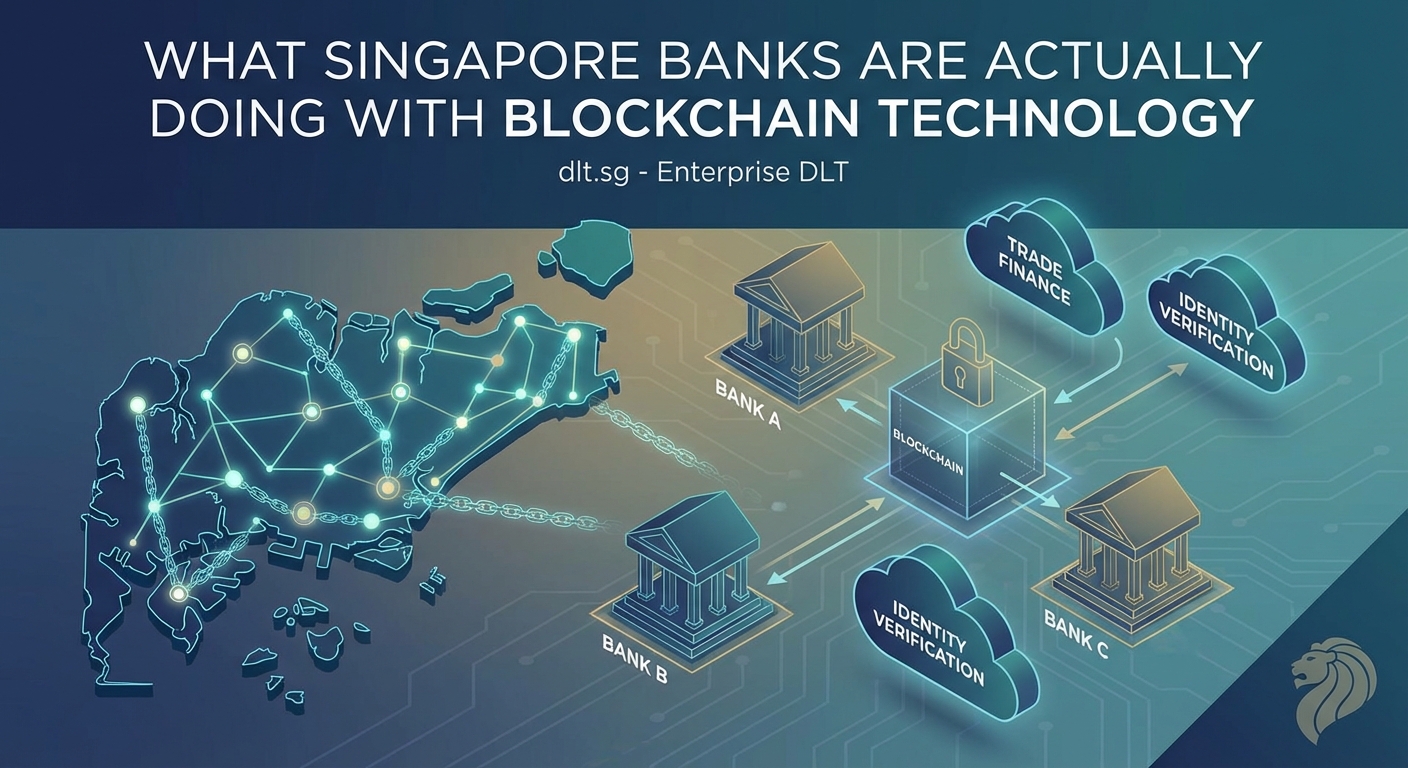
DBS operates the largest banking blockchain deployment in Southeast Asia. The bank runs multiple distributed ledger systems simultaneously, each serving different use cases.
DBS Digital Exchange and tokenized structured notes
In 2025, DBS expanded its digital asset platform to distribute tokenized structured notes. The bank reported over USD 1 billion in crypto options and structured note trades during the first half of the year.
These aren’t paper certificates. Each note exists as a token on a blockchain, enabling fractional ownership and 24/7 trading. Investors access these products through three digital platforms and multiple exchanges.
The tokenization process works through smart contracts that encode the note’s terms. When conditions trigger, the contract executes automatically without manual intervention. This reduces operational overhead and eliminates settlement risk.
Programmable rewards on blockchain
DBS launched a programmable rewards system that uses smart contracts to manage customer vouchers. Traditional loyalty programs require centralized databases and manual redemption processes.
The blockchain version lets customers transfer, combine, or redeem rewards instantly. Smart contracts enforce the rules, so the bank doesn’t need to validate each transaction manually. The system handles peak loads during promotional periods without additional infrastructure.
Understanding how distributed ledgers actually work helps explain why this architecture scales better than traditional databases.
OCBC’s institutional blockchain services
OCBC Bank focuses on wholesale banking applications. The institution enables intraday institutional lending through blockchain-based reverse repos on JPMorgan’s Digital Financing application.
Real-time collateral management
Traditional repo markets require overnight settlement. An institution with excess cash at 2 PM cannot efficiently lend it until the next business day.
OCBC’s blockchain solution enables intraday lending. A counterparty posts collateral, receives funds, and returns them within hours. The distributed ledger tracks ownership changes in real time, updating collateral positions instantly.
This matters for treasury operations. Banks can optimize their balance sheets throughout the trading day instead of waiting for batch settlement windows. The efficiency gain translates directly to reduced funding costs.
Cross-border payment rails
OCBC participates in Partior, a blockchain network for multi-currency settlement. The platform connects banks across Singapore, the United States, and Europe.
Partior processes payments in Singapore dollars, US dollars, and euros. Instead of routing through correspondent banks, institutions settle directly on the shared ledger. Settlement completes in minutes rather than days.
The network uses public vs private blockchain architecture principles, operating as a permissioned system where only verified financial institutions can participate.
UOB’s trade finance blockchain initiatives
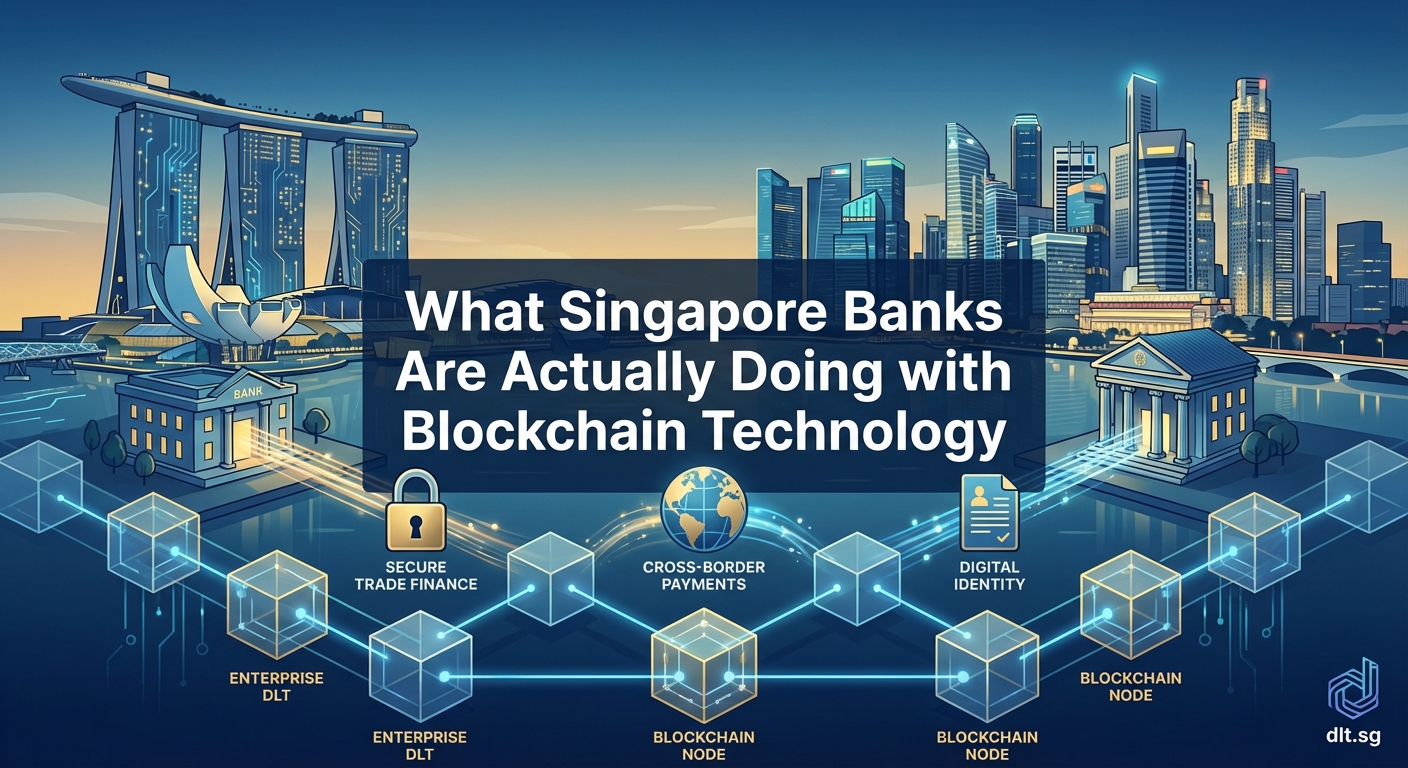
United Overseas Bank targets trade finance, where paper-based processes still dominate. A single letter of credit involves dozens of documents moving between exporters, importers, banks, and logistics providers.
Digitizing letters of credit
UOB uses blockchain to replace paper letters of credit with digital equivalents. All parties access a shared ledger that tracks document submission, verification, and approval.
When an exporter ships goods, they upload proof of shipment to the blockchain. The importer’s bank sees the update immediately and can release payment once conditions are met. No courier services, no physical document handling, no multi-week delays.
The system reduces processing time from weeks to days. More importantly, it eliminates discrepancies caused by manual data entry. Smart contracts validate that submitted documents match the letter of credit terms automatically.
Supply chain visibility
Trade finance blockchain extends beyond banks. UOB’s platform includes logistics providers, customs authorities, and port operators. Each participant adds data as goods move through the supply chain.
This creates end-to-end visibility. An importer can track their shipment from factory to warehouse in real time. Banks can verify that goods exist and are in transit before releasing funds. The shared truth reduces fraud and improves working capital efficiency.
How Singapore banks choose blockchain platforms
Banks evaluate distributed ledger platforms based on specific technical and business criteria. The choice depends on the use case, regulatory requirements, and interoperability needs.
| Platform Type | Primary Use Cases | Key Advantages | Common Limitations |
|---|---|---|---|
| Permissioned enterprise (Hyperledger Fabric) | Trade finance, supply chain | Full privacy control, customizable | Requires consortium management |
| Bank-led networks (Partior, Kinexys) | Cross-border payments, FX | Industry-specific features, regulatory alignment | Limited to member institutions |
| Public blockchain bridges | Tokenized assets, DeFi integration | Broad liquidity access, composability | Regulatory uncertainty, volatility exposure |
| Proprietary solutions | Customer-facing applications | Complete control, brand integration | Higher development costs, scaling challenges |
Most Singapore banks run multiple platforms simultaneously. DBS might use Hyperledger for trade finance while connecting to Partior for payments and operating a proprietary system for customer rewards.
The key is matching the technology to the business problem. Why Hyperledger Fabric dominates enterprise blockchain deployments explains why banks prefer this platform for certain applications.
Practical steps banks take to implement blockchain
Singapore banks follow a structured approach when deploying distributed ledger systems. These steps minimize risk while building toward production readiness.
-
Identify a high-value pain point with clear ROI metrics. Banks start with processes that have measurable inefficiencies. Cross-border payments with three-day settlement times and high correspondent banking fees make obvious targets. The business case writes itself when you can cut settlement time by 90% and reduce costs by 40%.
-
Build a minimum viable network with committed participants. Blockchain only works when multiple parties use the same system. Banks recruit partners who have the same pain point and will commit resources to the pilot. A payment network needs at least three banks in different jurisdictions. A trade finance platform needs exporters, importers, and logistics providers.
-
Run parallel systems during the pilot phase. Banks never shut down existing processes immediately. They run blockchain transactions alongside traditional methods, comparing results. If the distributed ledger fails, the conventional system catches the transaction. This parallel operation continues until the blockchain proves reliable enough to handle production volume.
-
Establish governance frameworks before scaling. Who decides when to upgrade the software? How do participants vote on rule changes? What happens if a member bank wants to exit? These questions must have documented answers before the network grows. Singapore banks typically form separate legal entities to govern shared blockchain platforms.
-
Integrate with core banking systems and regulatory reporting. A blockchain that sits isolated from other bank systems creates more work, not less. Banks build APIs that connect distributed ledgers to their core banking platforms, treasury systems, and regulatory reporting tools. Transactions must flow seamlessly between traditional and blockchain infrastructure.
-
Monitor performance metrics and optimize continuously. Production deployment is the beginning, not the end. Banks track transaction throughput, latency, error rates, and cost per transaction. They identify bottlenecks and optimize the system over time. OCBC’s intraday lending platform, for example, started with limited hours and gradually expanded to full trading day coverage.
Common mistakes banks avoid
Singapore’s successful implementations offer lessons in what not to do. These pitfalls derailed blockchain projects at other institutions globally.
“The biggest mistake is building blockchain for blockchain’s sake. If your existing database works fine, distributed ledger technology won’t magically improve it. We only use blockchain when multiple parties need to share data without trusting a central authority.” (Banking technology executive, speaking at a 2024 Singapore fintech conference)
Trying to decentralize everything. Not every banking process benefits from distributed ledgers. Account balances, customer profiles, and transaction histories work perfectly well in traditional databases. Blockchain adds value when multiple institutions need synchronized access to the same data.
Ignoring regulatory compliance from the start. Banks that treat compliance as an afterthought waste months rebuilding their systems. Singapore banks involve legal and compliance teams from day one. They design blockchain architectures that support audit trails, data retention requirements, and regulatory reporting.
Underestimating change management. Technology is the easy part. Getting operations teams to trust the new system takes longer. Banks invest in training, create detailed runbooks, and maintain support teams that can troubleshoot issues. Seven enterprise DLT pilot projects that failed documents how organizational resistance kills technically sound projects.
Building closed systems that cannot interoperate. A blockchain payment network that only works with three banks has limited value. Singapore banks design for interoperability from the start, using common standards and building bridges to other networks. Partior, for example, can connect to other blockchain payment systems through standardized interfaces.
Technical architecture patterns Singapore banks use
The distributed ledger systems running in Singapore banks share common architectural patterns. These design choices reflect lessons learned from earlier pilots and failed experiments globally.
Layered architecture with off-chain data storage
Banks don’t store everything on the blockchain. Large documents, images, and detailed transaction records live in traditional databases. The blockchain stores cryptographic hashes that prove the off-chain data hasn’t been tampered with.
This approach balances immutability with practicality. A trade finance letter of credit might include hundreds of pages of documentation. Storing all that on-chain would make the system slow and expensive. Instead, banks store the documents in secure databases and put only the document hashes on the blockchain.
When someone needs to verify a document, they hash it and compare the result to the blockchain record. If the hashes match, the document is authentic. If they don’t, someone modified it. Understanding the complete beginner’s guide to cryptographic hashing explains this verification process in detail.
Privacy-preserving transaction design
Banks cannot broadcast all transaction details to every network participant. Regulatory requirements and competitive concerns demand privacy.
Singapore banks use several techniques to maintain privacy on shared ledgers. Channels in Hyperledger Fabric let subsets of participants transact privately while still using the same underlying infrastructure. Zero-knowledge proofs let banks prove transaction validity without revealing amounts or counterparties.
These privacy features make blockchain viable for competitive banking markets. OCBC and DBS can both use Partior without seeing each other’s customer transactions.
Smart contract governance and upgradeability
Early blockchain systems made smart contracts immutable. Once deployed, the code could never change. This created problems when bugs appeared or business requirements evolved.
Modern banking blockchains use upgradeable smart contracts. The contract logic can be updated, but changes require approval from multiple participants. This prevents any single bank from unilaterally modifying system behavior while still allowing necessary updates.
The governance process typically requires a majority vote or unanimous consent, depending on the change’s impact. Critical security patches might need only a majority, while fundamental rule changes require everyone to agree.
Measuring blockchain success in banking
Singapore banks track specific metrics to evaluate whether their distributed ledger investments deliver value. These measurements go beyond technology performance to focus on business outcomes.
-
Settlement time reduction. Traditional cross-border payments take two to five days. Blockchain systems target same-day or real-time settlement. Banks measure the percentage of transactions that settle within target timeframes.
-
Cost per transaction. Correspondent banking fees, manual processing costs, and reconciliation expenses add up. Banks compare the total cost of processing a blockchain transaction against the traditional method. Successful implementations cut costs by 30% to 60%.
-
Operational error rates. Manual data entry causes mistakes. Blockchain systems with automated validation should reduce errors. Banks track discrepancy rates and the time required to resolve issues.
-
Liquidity optimization. Faster settlement lets banks operate with lower reserve balances. They measure how much capital they can free up by reducing settlement times. This metric directly impacts return on equity.
-
Network effects and volume growth. A payment network with three banks has limited utility. One with thirty banks becomes infrastructure. Banks track participant growth and transaction volume increases as indicators of platform success.
-
Customer satisfaction and adoption rates. For customer-facing applications like DBS’s programmable rewards, usage metrics matter. Banks measure active users, transaction frequency, and customer feedback scores.
Building a business case for blockchain provides frameworks for calculating these metrics and presenting results to stakeholders.
Regulatory support and compliance requirements
Singapore’s Monetary Authority actively supports blockchain innovation while maintaining strict oversight. This balance enables experimentation without compromising financial stability.
The regulatory sandbox approach
MAS operates a sandbox program that lets banks test new technologies with real customers under relaxed regulatory requirements. Participants must demonstrate adequate risk controls and customer protection measures.
The sandbox provides a path from pilot to production. Banks start with limited transaction volumes and customer counts. As they prove the system works, MAS gradually removes restrictions until the service operates under standard banking regulations.
This approach reduces the risk of regulatory surprises. Banks know the compliance requirements before they invest in full-scale deployment.
Payment Services Act and digital asset rules
How Singapore’s Payment Services Act reshapes digital asset compliance governs blockchain-based payment systems and tokenized assets. Banks must obtain appropriate licenses for different activities.
Operating a payment network requires a Major Payment Institution license. Dealing in digital payment tokens needs a separate license. Banks must implement anti-money laundering controls, customer due diligence processes, and transaction monitoring systems.
These requirements shape blockchain architecture. Systems must capture sufficient transaction data to support regulatory reporting. Smart contracts must include controls that prevent sanctioned parties from participating.
What comes next for Singapore banking blockchain
The current implementations are foundations for broader transformation. Banks are planning next-generation capabilities that build on existing infrastructure.
Programmable central bank money. Project Ubin explored how central bank digital currency would work on distributed ledgers. The next phase could see MAS issuing digital Singapore dollars that banks can use for instant settlement.
Cross-border CBDC corridors. Singapore is working with other countries to connect their CBDC systems. Banks would settle international transactions using central bank money on blockchain networks, eliminating correspondent banking entirely.
Tokenized deposit accounts. Instead of traditional bank accounts, customers could hold tokenized deposits that work like stablecoins but with full deposit insurance. These tokens could move across blockchain networks while remaining bank liabilities.
DeFi integration for institutional services. Banks are exploring how to connect their blockchain systems to decentralized finance protocols. This could let institutional clients access DeFi liquidity while maintaining regulatory compliance through bank-operated gateways.
Interoperability between bank blockchain networks. Right now, Partior, Kinexys, and other bank networks operate independently. Future development will focus on bridges that let these systems communicate. A payment starting on one network could settle on another automatically.
Why this matters for financial technology professionals
Singapore banks are not running experiments anymore. They operate production systems that process real value and serve actual customers. These implementations provide templates that other institutions globally will follow.
The architecture patterns, governance frameworks, and technical solutions developed here become industry standards. A blockchain developer in London or New York will encounter the same platforms, face similar challenges, and apply comparable solutions.
For professionals evaluating blockchain opportunities, Singapore offers proof that the technology works at scale in regulated environments. The question is no longer whether banks can use distributed ledgers effectively. Singapore banks answered that. The question now is how fast other institutions will catch up and what new capabilities will emerge as the infrastructure matures.
The banks that figure out blockchain first will have structural advantages in speed, cost, and service quality. Singapore’s three major banks are building those advantages right now, transaction by transaction, block by block.